





Guyana should explore ‘Petro-Caricom’ initiative as safety net for region – Academic
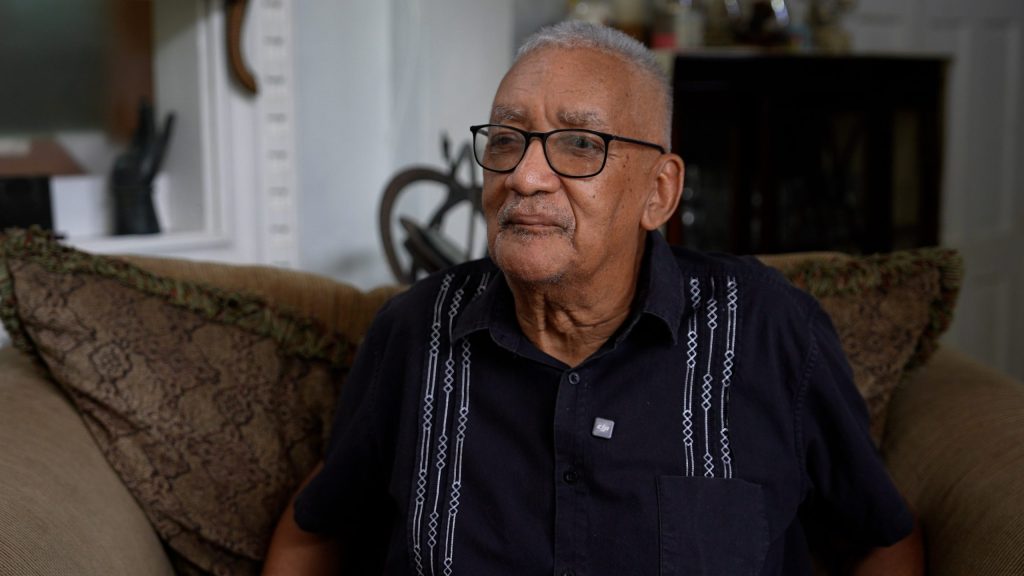

As debates over Venezuela’s future and broader Caribbean energy security intensify, political commentator and academic Dr Mark Kirton has urged Guyana to examine the possibility of a Petro-Caricom initiative, a potential regional energy cooperation mechanism modelled on the once fruitful Venezuelan Petrocaribe programme.
Dr Kirton’s comments come amid evolving geopolitical dynamics following a recent high-level call between President Dr Irfaan Ali and US Secretary of State Marco Rubio. Kirton argues that Guyana, now an emerging regional player, should look beyond immediate diplomatic wins and consider structural regional arrangements to safeguard energy supplies and bolster economic integration.
Petrocaribe was an energy cooperation agreement launched in June 2005 by then Venezuelan President Hugo Chávez to provide Caribbean Community (CARICOM) states with access to Venezuelan oil on highly concessionary financial terms. Under the initiative, member countries could buy Venezuelan crude and petroleum products with only a small portion of the cost paid up front; the balance could be financed over long periods — up to 25 years — at low interest rates. Part of the cost could also be offset through the supply of goods and services rather than cash, giving smaller states greater flexibility in managing their energy needs.
At its height, Petrocaribe involved more than a dozen Caribbean and Central American nations and was intended to foster economic cooperation and solidarity, helping states manage volatile global oil prices while supporting social and development projects through special funds such as the ALBA-Caribe Fund.
For many smaller Caribbean economies, Petrocaribe was more than an energy deal, it was a form of regional support that eased fuel costs and enabled long-term planning during periods of high oil prices and tight global supplies. Guyana, for example, participated through schemes that saw part of its debt to Venezuela paid in rice and agricultural products, strengthening trade ties and supporting domestic producers.
However, the initiative largely collapsed by the late 2010s amid Venezuela’s deepening economic crisis, declining oil output and governance issues within its oil sector. Some analysts have also argued that while Petrocaribe delivered short-term relief, it may have discouraged investment in renewable energy and left member states with debt challenges.
Drawing on this history, Kirton suggests that Guyana and its CARICOM partners could consider a successor framework — Petro-Caricom — to support collective energy resilience, reduce reliance on any single supplier and build regional capacity. In his view, such a mechanism would not replicate Petrocaribe uncritically, but rather adapt its cooperation principles to today’s realities, including diversified energy sources and stronger regional governance.
Following the capture of Venezuelan President Nicolás Maduro by U.S. forces last Saturday, the Trump administration has signalled plans to channel significant volumes of Venezuelan oil to the United States with announcements that between 30 million and 50 million barrels of crude could be supplied to U.S. markets and sold at market prices under U.S. control, a move Washington says will benefit both countries but which reflects a clear shift toward U.S. influence over Venezuela’s vast energy resources.
Mohameds’ extradition matter adjourned to February 5
‘Watershed moment!’ Mark Vieira welcomes GT Challenge de las Américas
Related Articles
 Vendors around GPHC to be placed at nearby parking lot
Vendors along New Market Street and in the vicinity of the Georgetown Public Hospital, will be moved to a nearby...
 Major expansion of agricultural production in Regions 8, 9 expected
President Dr Irfaan Ali outlined major targets for expanded agricultural production in Regions Eight and Nine, a venture he said...
 Mohameds’ extradition matter adjourned to February 5
The extradition proceedings involving businessmen Azruddin Mohamed and his father, Nazar Mohamed, were on Thursday adjourned to February 5 and...