
 Wed, Jul 15, 2026


 Wed, Jul 15, 2026


‘Iswe’ gets 25 years for murder of girlfriend Shonette Dover, breaks down in court



By Kurt Campbell
Shaquawn Alleyne, known as “Iswe,” was on Thursday sentenced to 25 years imprisonment for the murder of his girlfriend, Shonette Dover
The sentence was imposed by Justice Sandil Kissoon at the Demerara High Court after Alleyne earlier admitted to killing the 21-year-old woman whose body was discovered buried in a shallow grave at his Linden home in 2021.
Before the sentence was handed down, Alleyne addressed the court in an emotional statement, pausing several times to take deep breaths as he struggled to maintain his composure.
Standing in the prisoner’s dock, shackled and visibly nervous, he apologised to Dover’s family and the nation.
“With a heavy heart, I stand before the court and apologise to the victim’s family. I am here today taking accountability for my actions,” Alleyne said.
Breaking down in tears when mentioning Dover’s name, he told the court that he remembered every detail of what occurred and claimed the shooting was accidental.
“I made a mistake and I’m asking the family and nation to forgive me,” he said. “I sincerely apologise for my actions and all the pain and hurt I caused.”
He further pleaded with the court for leniency, saying he understood there were consequences for his actions and asking for a second chance.
“Let this be a deterrent for others,” he added.
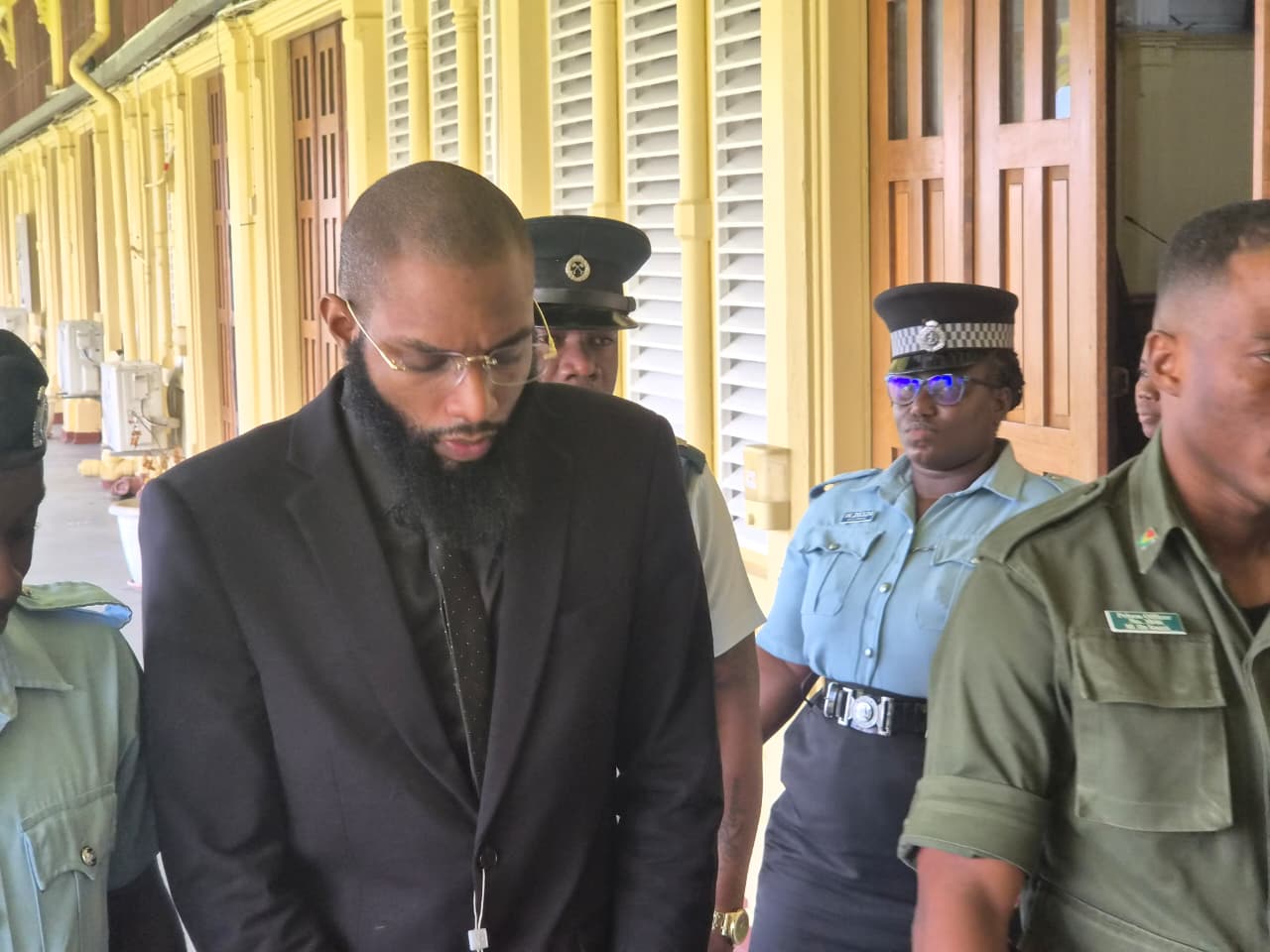
In delivering his sentencing remarks, Justice Kissoon stressed that the court’s paramount consideration must always be the welfare and well-being of society, particularly its most vulnerable members.
The judge noted that murder carries a potential sentence of life imprisonment and explained that the court was required to apply the established sentencing methodology and starting-point approach in determining an appropriate penalty.
Justice Kissoon said one of the major aggravating factors was the prevalence of intimate partner violence and unlawful killings of women by their partners.
He observed that Dover was only 21 years old at the time of her death and was killed in what should have been her place of safety. The crime was also committed in the presence of her younger sister.
“The observations of this court apply equally in similar cases,” the judge said, adding that courts must impose punishments that match the seriousness of offences and serve as a deterrent to others.
The judge outlined a lengthy list of aggravating factors which significantly increased the seriousness of the offence.
Among them was Alleyne’s failure to render assistance to Dover after she was shot. Instead of seeking urgent medical attention, he concealed the crime by burying her body in a shallow grave.
The court also found it particularly troubling that Dover’s younger sister was made a participant in the concealment of the crime.
Justice Kissoon further noted that Alleyne used a firearm for no lawful purpose and afterwards misled family members, friends, community members and even elders who attempted to assist in locating the missing young woman.
The judge said Alleyne manipulated those closest to the victim while the nation searched for answers regarding her disappearance.
Another aggravating factor was his decision to flee Guyana and establish residence in Suriname in an effort to evade law enforcement authorities. The court noted that he did not voluntarily return to face justice.
Justice Kissoon described the murder as a grave and heinous offence.
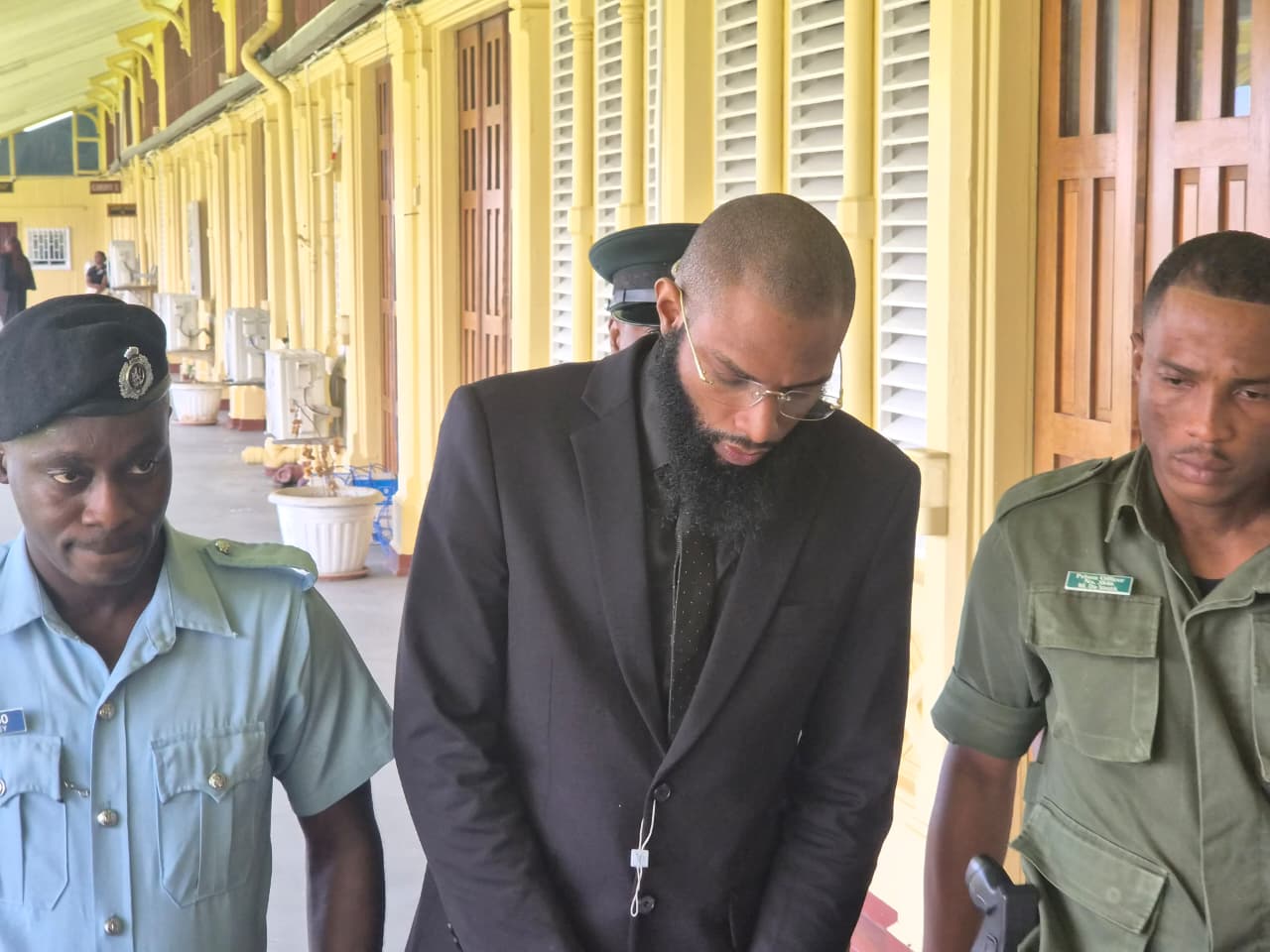
While reports were submitted outlining matters in Alleyne’s favour, the judge said there were no significant mitigating factors arising from the circumstances of the offence itself.
The court began with a starting point of 35 years imprisonment before applying reductions in accordance with established legal principles, including Alleyne’s guilty plea and acceptance of responsibility.
The final sentence imposed was 25 years imprisonment.
The sentence is to run from the date Alleyne was first imprisoned in connection with the matter in 2024, meaning time already spent in custody will be credited toward the sentence.
Prior to sentencing, the State called a probation and social services officer who prepared a probation report detailing Alleyne’s personal background and circumstances.
The defence declined to cross-examine the witness.
The prosecution also called a Ministry of Home Affairs employee who prepared Alleyne’s prison conduct report. Defence counsel again declined cross-examination.
During questioning by the judge, it emerged that while Alleyne had previous brushes with the law, he had never been convicted of any offence.
The court also received a psychiatric assessment, victim impact statements—including one from Dover’s mother—and submissions from both the prosecution and defence outlining aggravating and mitigating factors.
Alleyne’s guilty plea earlier this month spared the victim’s family the ordeal of a lengthy trial.
The indictment alleged that he murdered Dover in March 2021.
Investigators later discovered that Dover had been fatally shot and buried in a shallow grave in the backyard of Alleyne’s home at Canvas City, Wismar, Linden.
The case sparked widespread public outrage and renewed national discussions about violence against women and intimate partner killings.