





Guyana’s regional profile is on the rise
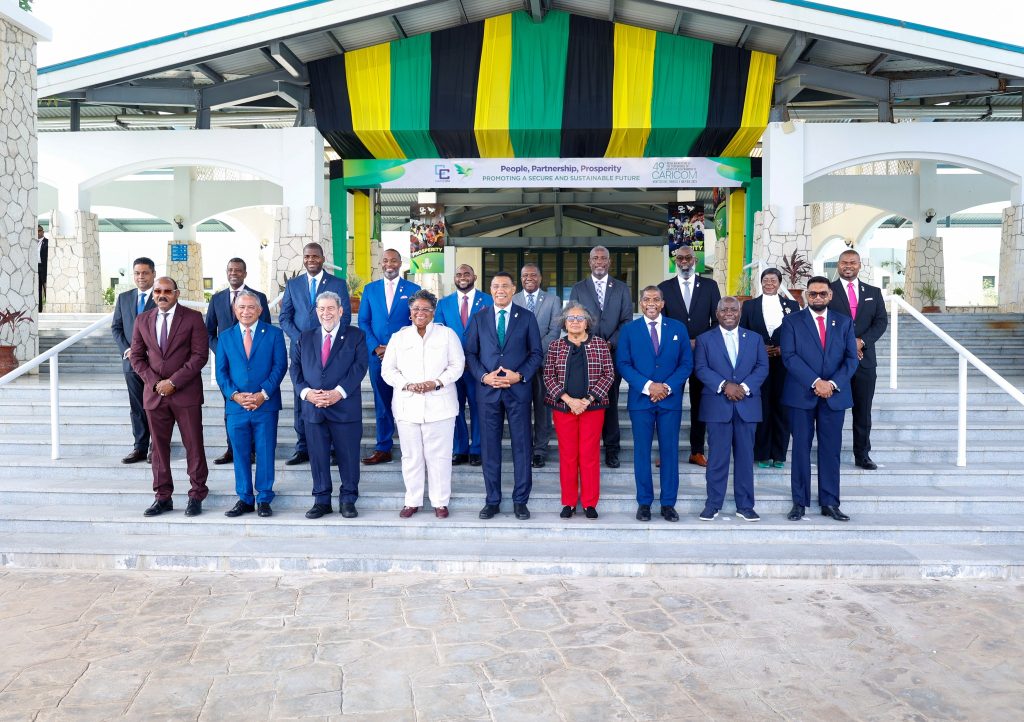

As regional leaders gather in Montego Bay, Jamaica, for CARICOM’s 49th Annual Heads of Government Meetings, Guyana is well on its way to cementing itself as a long-term leader within the regional grouping. Guyana’s expansion of its agriculture sector, its growing energy dominance, and its positioning as a hub for technology and innovation are directly and indirectly yielding benefits for all CARICOM members. All of this has come about in the past five years–laying a strong foundation that is poised for Guyana to capitalize on in the next half decade. Doing so, by continuing to advance regional leadership, will not only benefit the wider Caribbean but bring sustainable benefits to Guyanese themselves.

But first, why does CARICOM matter to Guyana and the average Guyanese? Simply, no country–especially small ones like Guyana–operate in a silo. The international system is vast and intertwined, and a country’s survival and progress only occur in partnerships. For example, even countries like the United States that tend to make unilateral decisions, work in partnerships, whether this takes place in the form of trading partners, allies to join forces with at multilateral organizations, or signing new treaties around common challenges. This is the reason for organizations like CARICOM to exist. It brings order to a disorganized world, and gives a platform to countries, like Guyana to speak with 14 voices rather than just one. In this dynamic and complex world, friends are currency, and in CARICOM, Guyana is finding new wealth under the current government’s leadership.
Therefore, for Guyana, CARICOM is about partnerships. The potential to aggregate certain sectors with those in our neighborhood creates a more attractive investment destination for larger companies. The bigger the market and investment, the lower the prices for Guyanese. Politically, CARICOM helps our region, including Guyana, punch above its weight in multilateral institutions, like the United Nations and the Organization of American States (OAS). From the election of the OAS Secretary General to treaties ratified at the UN, CARICOM’s vote is heavily courted since each country is equated with one vote. This means that no matter the political clout held by an individual country, all countries’ contributions are equal. Thus, President Ali’s continued stewardship–while working closely with his regional counterparts–on CARICOM priorities is crucial to helping shape a world that benefits Guyanese citizens on critical matters, such as Venezuela’s increasingly aggressive rhetoric and actions on our border.
So, if CARICOM matters, then where lies the opportunities for Guyana? First, Guyana’s growth as an agricultural hub means that CARICOM countries can become new markets for the exports of food and fertilizers. CARICOM countries are some of the most import-dependent markets in the world for food. Lost fertilizer production at the onset of Russia’s war in Ukraine saw food inflation spike and rising shipping costs has gradually increased the cost of food across the region. Reducing food imports, as part of CARICOM’s 25 by 2030 plan that is led by Guyana, can help the region withstand the shocks to food prices that come with changes in the international system. The same concepts can be applied to energy, medical services and equipment, and technology.
Second, Guyana’s leadership in the Caribbean is drawing more eyes to the region. Yes, Guyana’s growing wealth can help to reduce the region’s import on a variety of commodities and services, such as energy and technology. But more importantly, over the past five years, the Caribbean’s main development partners have pinpointed Guyana as a natural bridge to working within the region. No major international donor or development partners travel to the Caribbean without stopping in Guyana, from US Secretary of State Marco Rubio to UK Foreign Secretary David Lammy to Indian Prime Minister Narendra Modi.
As a result, the narrative of how the Caribbean is viewed is dramatically changing because of Guyana. Sitting in Washington DC, I have seen firsthand how international companies and institutions look at Guyana and the Caribbean as more than a region faced with immense challenges, such as climate change and energy insecurity. Now, part of the narrative are those same actors seeing the region as a zone of opportunity, anchored mostly by Guyana’s economic trajectory and leadership.
Guyana’s leadership in the Caribbean is set to skyrocket over the next five years. The foundation has been set due to the inroads the government has made across food, energy, and tackling regionwide crises, such as Hait. If Guyana can continue along this path, the region’s prosperity will strengthen and bring untold benefits for Guyanese and CARICOM citizens.
*Wazim Mowla is the Fellow and Lead of the Caribbean Initiative at the Atlantic Council and is a nonresident scholar at Florida International University’s Jack D. Gordon Institute for Public Policy.
ANUG’s Chairman Mark DeFrance was suspended from medical practice for forgery
Albouystown woman arrested for smuggling SIM cards into Camp Street Prison
Related Articles
 Gov’t projects 16.2% growth in 2026 promising more homes, jobs & cash...
By Kurt Campbell kurt@newsroom.gy Guyana is aiming high in 2026. Finance Minister Dr Ashni Singh unveiled the country’s largest-ever...
 Guyana unveils historic $1.558 trillion Budget 2026, ‘Putting People First’
By Kurt Campbell kurt@newsroom.gy Guyana’s largest-ever budget was presented in the National Assembly on Monday, with Senior Minister in...
 BUDGET 2026: Income tax threshold goes up to $140,000
The income tax threshold will increase from $130,000 to $140,000, Finance Minister Dr. Singh announced on Monday night during the...